
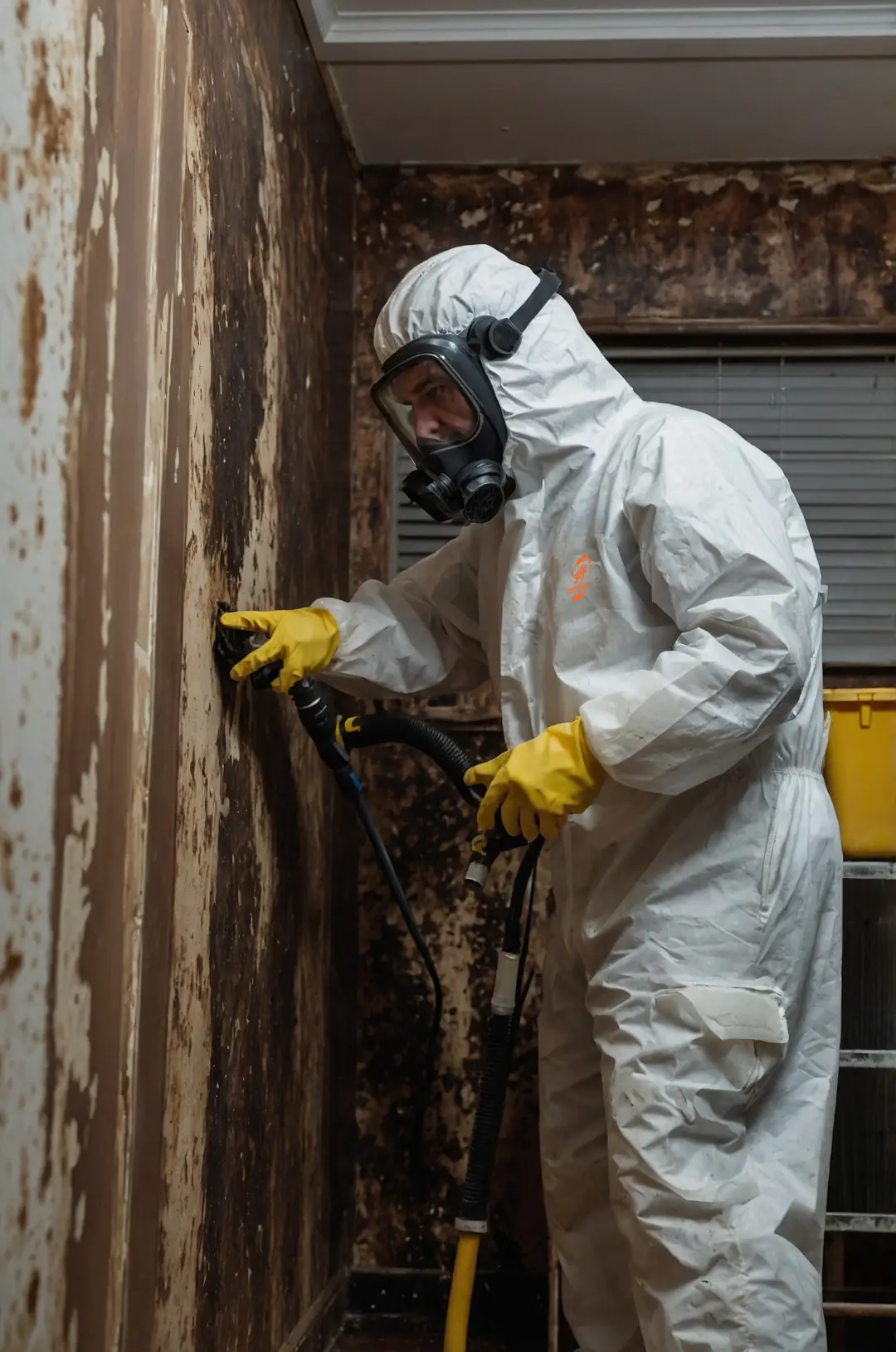
Mold Removal in North Fort Worth, TX
Mold is never the real problem. It's the sign of one. Somewhere there's moisture — a slow leak, a damp crawl space, an attic that runs wet every summer — and until that's fixed, the mold comes back. 911 Restoration of North Texas finds the moisture first, then removes the mold safely and makes sure it stays gone.
Our technicians are IICRC-trained, we're licensed and insured, and inspections and estimates are free.
Where We Find Mold in North Fort Worth
Crawl spaces under older homes. Much of the housing around Diamond Hill-Jarvis and Rosen Heights sits on pier-and-beam foundations. The crawl space underneath stays humid through a Texas summer, and that moisture rises into floor framing, subfloors and the house itself. Encapsulation — sealing the crawl space with a heavy vapor barrier — is often the only lasting fix.
Behind cabinets and inside walls in newer homes. In a slab home near Fossil Creek, mold usually follows a leak nobody saw: under a sink, behind a dishwasher, along a shower wall. By the time there's a smell, it has often been growing for weeks.
Attics and ceilings. Air conditioning runs hard here from May to October. A clogged condensate line or a sweating duct can keep insulation and drywall damp all season.
Signs You May Have a Mold Problem
- An earthy, musty smell that is strongest in one room, closet or cabinet
- Spots of black, green, gray or white on walls, ceilings, grout or the backs of furniture
- Paint that blisters or wallpaper that peels away from the wall
- Spots that come back within weeks of being cleaned
- Condensation that regularly forms on windows, pipes or AC vents
- Recent water damage that was mopped up but never professionally dried
Can You Clean It Yourself?
Sometimes. The U.S. Environmental Protection Agency's guidance is that a homeowner can usually clean a small area of mold — less than about 10 square feet, roughly a 3-foot-by-3-foot patch — on a hard surface, wearing gloves, goggles and an N-95 respirator. Fix the moisture first, scrub with detergent and water, and dry the area completely.
Call a professional when:
- The area is bigger than about 10 square feet, or the mold is in several places
- It's inside walls, under flooring, in the crawl space or in the attic
- It's in the HVAC system or ductwork, where running the system can spread spores through the house
- It follows sewage or contaminated water
- Someone in the home has asthma, allergies or a weakened immune system
- It keeps coming back after you've cleaned it
How We Remove Mold
- Mold inspection — moisture readings and a visual assessment to find the extent and the cause
- Containment — affected areas sealed off and kept under negative air pressure so spores don't spread
- Mold remediation — contaminated materials removed, surfaces cleaned, HEPA air filtration throughout
- Moisture correction — the leak, the humidity or the drainage problem dealt with, not just the growth
- Crawl space encapsulation — vapor barrier and sealing for raised-foundation homes
- Rebuild — drywall and finishes put back once the area is clear
Is Mold Testing Worth It?
If you can see the mold, you usually don't need a lab test to confirm it's there — the job is to remove it and fix the moisture. Testing earns its cost in a few situations: when you smell mold but can't find it, when a buyer or seller needs a report during a home sale, and after remediation, to confirm the work area is clear before walls are closed up. We'll tell you honestly whether testing will tell you anything you don't already know.
Frequently Asked Questions
Can I just clean it with bleach?
On a small patch on a hard, non-porous surface, sometimes. On drywall, wood or insulation, no — bleach lightens the color but doesn't reach growth inside the material, and the added water can make it worse. If it's bigger than a small patch, or it keeps coming back, it needs the moisture source found.
Is mold covered by insurance?
When mold results from a covered event, such as a burst pipe, it often is, up to a policy limit. Mold from long-term humidity or an old leak usually is not. We document the cause and the extent so your adjuster has what they need.
How much does mold removal cost?
It depends on how much area is affected, what materials have to come out and what it takes to fix the moisture source. A contained area under one sink is a very different job from a whole crawl space. The inspection and estimate are free, so you'll know before you commit.
How long does mold remediation take?
A small, contained area is often finished in a day or two. Larger jobs, crawl spaces and anything that needs drying first can take several days, plus time for repairs. We give you a timeline with the estimate.
Smell Something Musty?
Mold spreads quietly. Call 911 Restoration of North Texas at (817) 554-3849 for a free inspection.
See all North Fort Worth restoration services, including water damage restoration and sanitization services.