
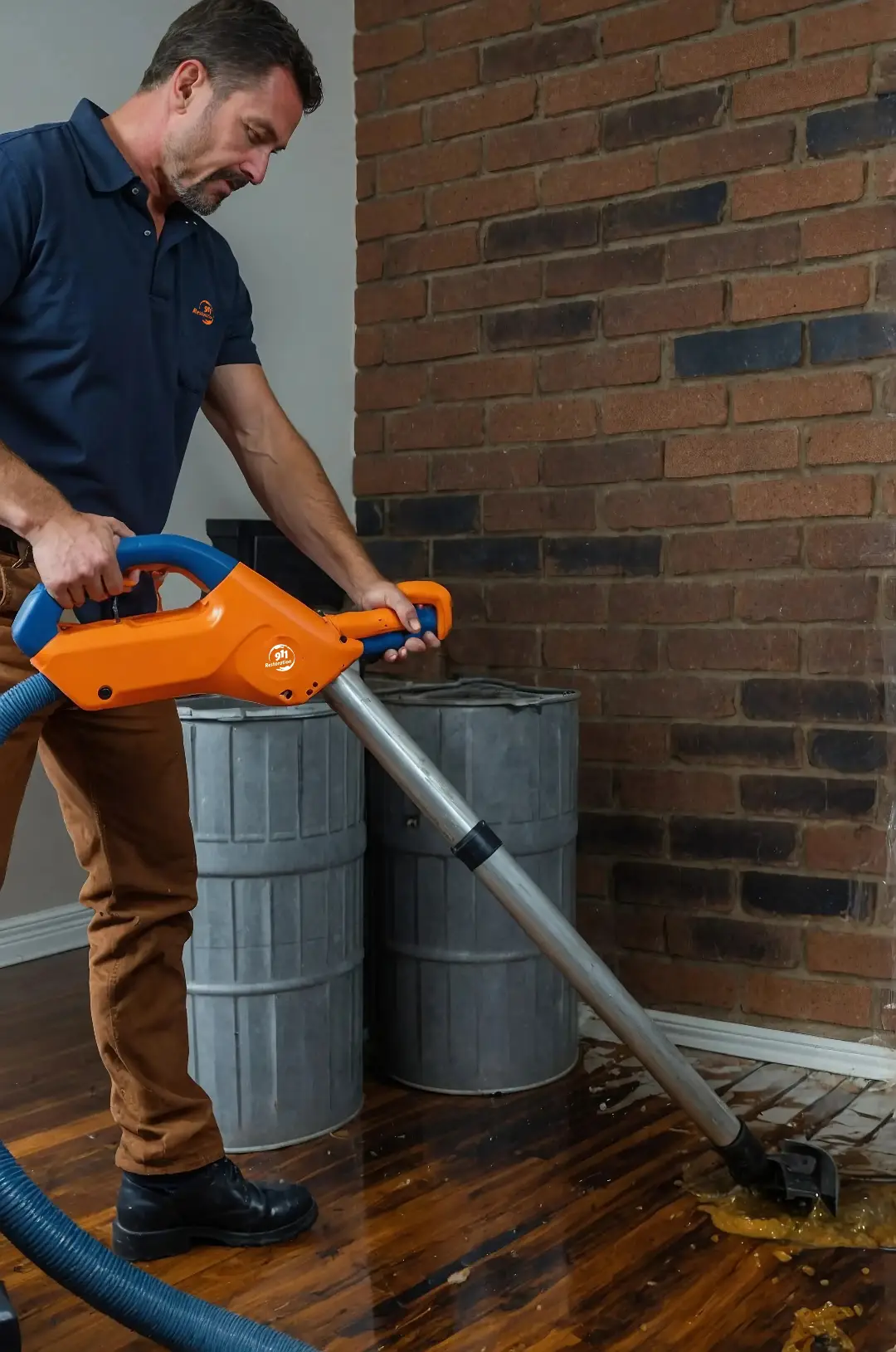
Water Damage Restoration in North Fort Worth, TX
Where water goes in a north Fort Worth home depends on when the house was built. In a 1930s home in Rosen Heights, a leak runs between the floor joists and down into the crawl space. In a 2000s slab home off North Tarrant Parkway, it shows up as a warm patch in the floor or a water bill that doesn't make sense. 911 Restoration of North Texas finds where the water went, removes it and dries the structure — 24 hours a day.
Estimates are free. Our technicians are IICRC-trained, we're licensed and insured, and we document the loss for your insurance company and bill them directly.
Where the Water Comes From
- Slab leaks. North Texas clay swells and shrinks with the seasons, and plumbing buried in a slab foundation takes the strain. Newer homes in the Villages of Woodland Springs and around it sit on exactly this kind of ground.
- Supply lines and water heaters at the end of their life. Homes in Summerfields built in the 1980s and 1990s are reaching the age where the original parts fail — often a braided line under a sink or a water heater in the garage.
- Older plumbing under raised floors. On the Northside, many homes still run original or patched lines beneath pier-and-beam floors, where a slow leak can go unseen for weeks.
- Attic AC overflows. A clogged condensate line in the middle of summer can soak attic insulation and bring a ceiling down.
- Storm water. Wind-driven rain through roofs, windows and door frames during spring storms.
Signs of Water Damage You Can't See Yet
Most water damage is found late, because the water travels before it shows. Call us to check if you notice any of these:
- Paint that bubbles or peels, or a yellow-brown ring on a ceiling
- Baseboards that swell or separate from the wall
- Hardwood that cups at the edges, or laminate that lifts at the seams
- A floor that feels soft or springy — common in older raised-foundation homes on the Northside
- A warm spot on a tile or concrete floor, which can point to a hot-water line leaking under the slab
- A musty smell in one room or closet that doesn't clear
- A water bill that jumps with no change in how you use water
The First Hour: What to Do
- Stop the water. Close the main shut-off valve. In most north Fort Worth homes it sits near the street in a meter box, or where the line enters the house.
- Make it safe. If the breaker panel is dry and safe to reach, turn off power to the wet rooms. Stay out of rooms where water is near outlets or the ceiling is sagging.
- Save what you can. Lift furniture onto blocks or foil, take rugs and electronics out of the wet area, and move photos and papers somewhere dry.
- Take photos. A few wide shots and close-ups of the water and the source help your claim.
- Call us, then your insurer. We can start the same day, and we'll give your adjuster the readings and photos they need.
Don't use a household vacuum on standing water, and don't run box fans in a closed room. That can spread the moisture rather than remove it.
What We Do
- Emergency water removal — truck-mounted and portable extraction to get standing water out fast
- Water damage inspection — moisture meters and thermal imaging to map where the water travelled, including inside walls and under flooring
- Burst pipe and leak response — we stop the source, and coordinate the plumbing repair or slab leak locate
- Structural drying — commercial dehumidifiers and air movers, with readings taken every day
- Crawl space and lower-level flooding cleanup — common in older homes on raised foundations
- Repairs — drywall, flooring and trim put back by our reconstruction team
We keep drying until the readings say the structure is dry, not until a set number of days has passed. Closing a wall up early is how water damage turns into a mold problem.
What Affects the Cost
No two water jobs are priced the same, but the same few things drive the number every time:
- What kind of water it is. Clean water from a supply line is the simplest to dry. Water from a dishwasher, washing machine or toilet overflow needs cleaning as well as drying. Sewage or outside flood water means removing more materials.
- How long it sat. Water caught within hours can usually be dried in place. After a day or two, drywall, insulation and carpet pad often have to come out.
- What got wet. Tile and concrete dry easily. Hardwood, cabinets and plaster take longer and need more care.
- How hard it is to reach. Water under a slab or in a crawl space takes more time and equipment than water on an open floor.
- Whether repairs are needed. Drying is one part of the bill. Putting back drywall, flooring and trim is another.
You'll get a free written estimate before we start, and on insurance jobs we price with the same estimating software adjusters use, so the numbers line up.
Frequently Asked Questions
What does water damage restoration cost in North Fort Worth?
Cost comes down to how much water, how long it sat, whether it was clean supply water or something dirtier, and how much has to be removed rather than dried in place. A supply line caught the same day may need only a few days of drying. A slab leak under hardwood can mean lifting flooring and repairing plumbing first. You get a free written estimate before work starts, and on insurance jobs we price with the same estimating software adjusters use.
Does homeowner's insurance cover it?
Usually, when the damage is sudden — a burst pipe, a failed water heater, a storm. Damage from a leak that has been going on for months is often excluded. We document everything and work directly with your adjuster, who makes the coverage decision.
Can wet hardwood floors be saved?
Often, if drying starts quickly. We use specialized mats and dehumidifiers to pull water out of the boards and the subfloor underneath. Boards that have cupped badly or soaked for days may need replacing, and we'll show you the readings either way.
Do I need a plumber before you arrive?
Not necessarily. If you can't stop the leak at the shut-off, we can. For slab leaks and repairs inside walls, we coordinate the plumbing work so the drying can start right away.
Water in Your Home Right Now?
Every hour, water moves further into drywall, insulation and flooring. Call 911 Restoration of North Texas at (817) 554-3849 — we answer 24/7.
Water damage is one of eight restoration services we provide on the north side — see all North Fort Worth restoration services, including mold removal, sewage cleanup and storm cleanup.