
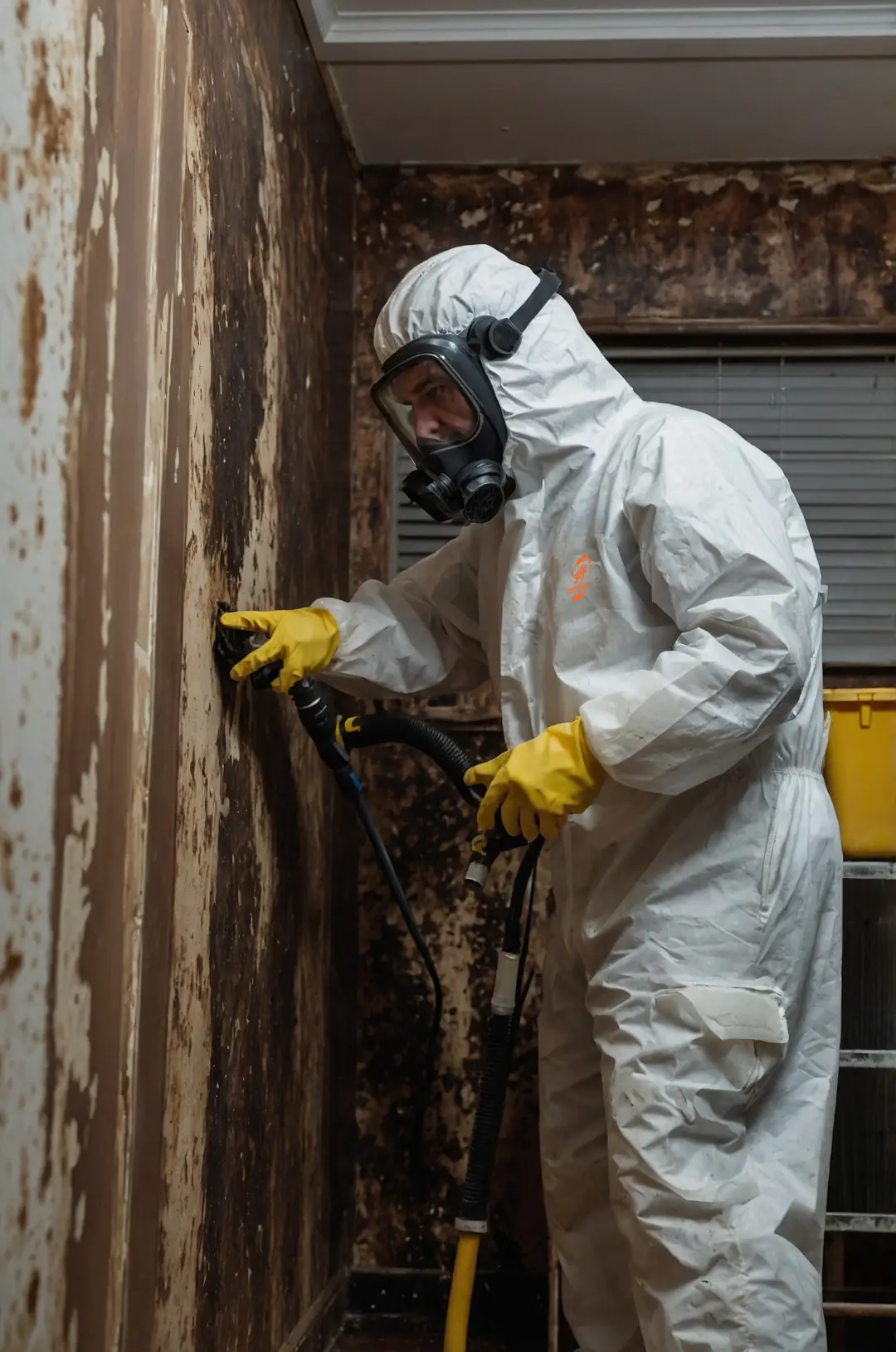
Mold Removal and Remediation in Denton, TX
Mold grows where moisture stays. Remove the mold without fixing the moisture, and it returns within months. 911 Restoration of North Texas starts by finding out why an area is damp, then removes the mold under containment and makes sure the cause is dealt with.
Mold inspections and estimates are free. We're licensed and insured, and our remediation crews are trained to IICRC standards.
Where Mold Shows Up in Denton
Crawl spaces under older homes. The historic homes along West Oak, West Hickory and the streets around them mostly sit on pier-and-beam foundations. Through a long Texas summer the crawl space stays humid, and that moisture works into floor joists and subfloors. Sealing the crawl space with a vapor barrier is often the lasting fix.
Apartments and rentals. Bathrooms without working exhaust fans, windows that sweat, and slow leaks under sinks are the most common sources in rental units. Because the tenant sees the mold and the owner pays to fix it, a clear inspection report helps both sides.
Newer homes. In slab homes, mold usually follows a leak no one noticed — behind a dishwasher, under a vanity, or around a shower pan.
Attics everywhere. AC systems run from spring to fall in Denton. A blocked condensate line or a sweating duct can keep attic insulation damp all season.
How to Tell You Have Mold
- A stale, damp smell when you open a closet, a cabinet under the sink, or the access hatch to a crawl space
- Dark speckling on bathroom ceilings, around window frames or along the caulk at the tub
- Fuzzy or powdery patches on the back of furniture pushed against an outside wall
- Stains that keep returning after you clean them
- Warped or stained baseboards, or drywall that has darkened near the floor
- A leak in the past few months that was cleaned up but never professionally dried
Small Patch or Professional Job?
The U.S. Environmental Protection Agency says most people can clean up a small area of mold themselves — under about 10 square feet, about the size of a 3-by-3-foot square. Stop the moisture, wear gloves, goggles and an N-95 respirator, scrub hard surfaces with detergent and water, and dry everything thoroughly. The EPA doesn't recommend bleach as a routine part of mold cleanup.
Bring in a professional if:
- The mold covers more than about 10 square feet, or shows up in more than one room
- You suspect it's behind walls, under floors, in the attic or in the crawl space
- It's in the air conditioning system — and in that case, don't run the system until it's checked
- The water that caused it was sewage or outside flood water
- Anyone in the household has breathing problems or a weakened immune system
- You rent, and the repair is the landlord's responsibility
Our Mold Remediation Process
- Mold inspection — moisture readings and a visual assessment to find how far it has spread and why
- Containment — the work area sealed and kept under negative air pressure so spores stay put
- Removal and cleaning — contaminated materials removed, surfaces cleaned, HEPA filtration running throughout
- Fixing the moisture — the leak, the ventilation or the drainage problem, not just the growth
- Crawl space encapsulation — for raised-foundation homes
- Rebuild — drywall and finishes restored once the area is clear
Testing and Clearance
When mold is visible, the EPA notes that sampling it usually isn't necessary — what matters is removing it and stopping the moisture. Where testing does help is in confirming the job is finished. For landlords especially, a clearance check after remediation and before a new tenant moves in gives you a record that the unit was handled properly. We'll recommend testing only when it answers a real question.
Frequently Asked Questions
I rent and I've found mold. What should I do?
Tell your landlord or property manager in writing and take photos. Avoid scrubbing large patches yourself, because that spreads spores. We can inspect and report on what we find, which gives both of you the same facts to work from.
Is mold removal covered by insurance?
Often, when the mold comes from a sudden, covered event like a burst pipe, usually up to a policy limit. Mold from long-term humidity or an old leak typically isn't. We document the cause and the extent so your adjuster can decide.
How much does mold removal cost in Denton?
It depends on how large the affected area is, which materials need removing and what it takes to fix the source. A small area under one sink is a very different job from a full crawl space. The inspection and estimate are free.
Can I stay in the house during mold removal?
Usually, yes. The work area is sealed off and kept under negative pressure, so the rest of the home stays usable. For large jobs, or if someone in the household has health concerns, we'll talk through whether staying elsewhere for a few days makes sense.
Smell Something Musty?
Mold doesn't stop on its own. Call 911 Restoration of North Texas at (817) 554-3849 and we'll book a free mold inspection.
See all Denton restoration services, including water damage restoration and sanitization services.